Anodizing

Type III Hardcoat Anodizing (MIL-PRF-8625 / AMS 2469)

Type III hardcoat anodizing is engineered for wear — a dense, thick, abrasion-resistant oxide with surface hardness in the range of hardened tool steel. Gleco applies hardcoat to MIL-PRF-8625 Type III and AMS 2469 at our AS9100D and ISO 9001:2015 certified, ITAR Registered Texas plants.

  • AS9100D
  • ISO 9001:2015
  • ITAR Registered
  • Rowlett & McAllen, TX
📍 Available at: McAllen, TX (Rio Grande Valley) only

Type III Hardcoat Specifications

Governing specsMIL-PRF-8625 Type III; AMS 2469 (AMS 2468 legacy)
ClassesClass 1 non-dyed; Class 2 dyed (black typical)
Thickness0.002 in nominal (spec range 0.0005–0.0045 in)
Hardness~500+ VPN; 60–70 HRC equivalent
Wear (Taber)≤ 1.5 mg/1,000 cycles (3.5 mg for 2xxx copper alloys)
Dimensional impact~50% penetration / ~50% buildup (~0.001 in per surface at 0.002 in)
Sealing / salt sprayUnsealed for max wear; sealed for corrosion (336 h salt spray)
Typical usesPistons, cylinders, slides, guide rails, valve bodies, weapons components, aluminum wear surfaces
See also: anodizing overview, Type II vs. Type III comparison, and chem film for conductive/grounding areas.
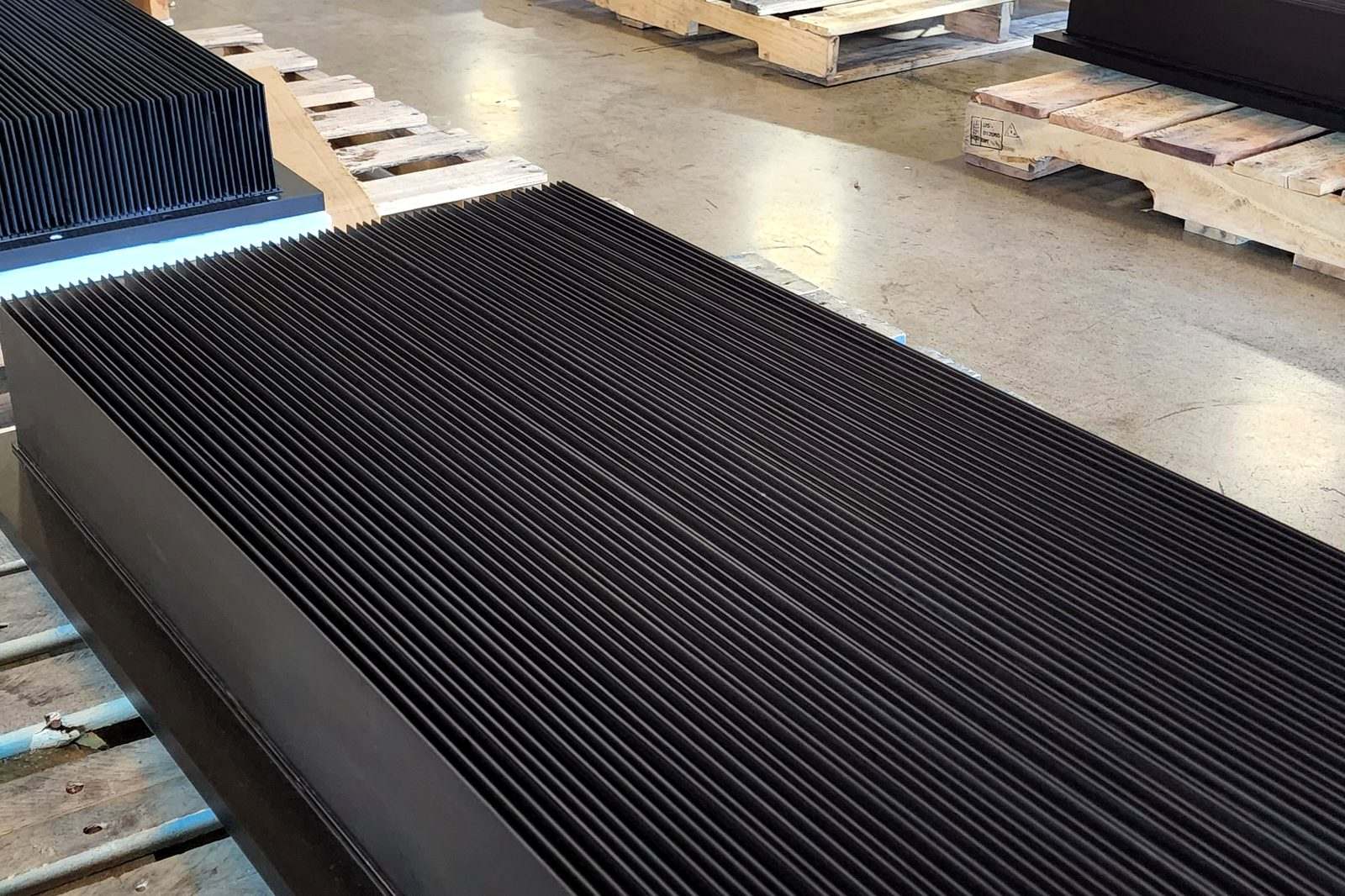
Black Type III hardcoat anodized aluminium heat sink
An aluminium heat sink finished in black Type III hardcoat. Hardcoat builds a thick, dense oxide — wear resistance first, colour second.

Type III Hardcoat FAQ

What is Type III hardcoat anodizing?

Type III is hard anodic coating (hardcoat) per MIL-PRF-8625 Type III, run cold at higher current density to build a dense, thick, abrasion-resistant oxide for wear surfaces. Unless the drawing states otherwise, the default thickness is 0.002 in.

How hard is hardcoat anodize?

Surface hardness is commonly 500+ VPN, roughly 60–70 HRC equivalent — putting the surface of a soft aluminum part in the range of hardened tool steel. Wear is verified by Taber abrasion per the spec.

How much does the part grow?

About half the coating penetrates and half builds outward, so a 0.002 in hardcoat grows roughly 0.001 in per surface (0.002 in on a diameter). Machinists should cut undersize; call out whether dimensions apply after coating.

Should hardcoat be sealed?

Leave it unsealed for maximum wear resistance; seal only when corrosion protection matters more than abrasion, since sealing softens the outer oxide. Sealed hardcoat is tested to 336 h salt spray.

Get a Quote

Send your drawing, thickness, and sealed/unsealed requirement. Request a quote →
Ready when you are

Not sure which finish your part needs?

Send the print and we’ll tell you. Quotes typically back within one business day, from either plant.

Gleco Plating — Finish Well

Precision metal finishing since 1979. Plating, anodizing, coatings and passivation from two Texas plants.

  • AS9100D
  • ISO 9001:2015
  • ITAR Registered
  • DFARS Compliant
  • RoHS

Locations

Gleco Rowlett
2220 Grisham Drive
Rowlett, TX 75088
972-475-4300

Gleco McAllen
3800 W. Ursula Ave
McAllen, TX 78503
956-800-4069

info@glecoplating.com

© 2026 Gleco Plating Incorporated. All rights reserved. Privacy PolicyTerms & ConditionsSupplier TermsContact
